
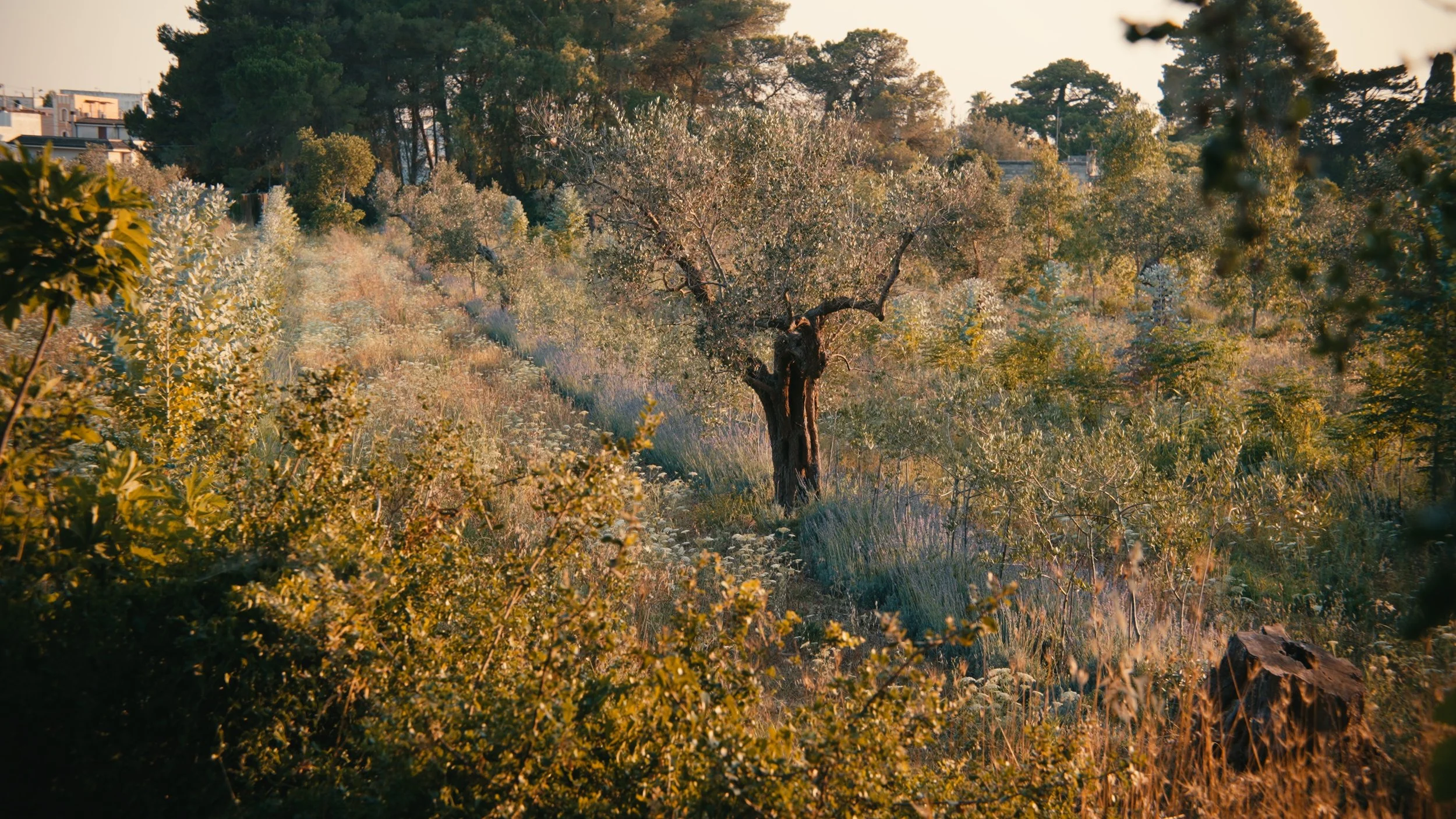
Syntropic farm in Puglia
Salento, Depressa - Tricase (LE), Italy

our farm
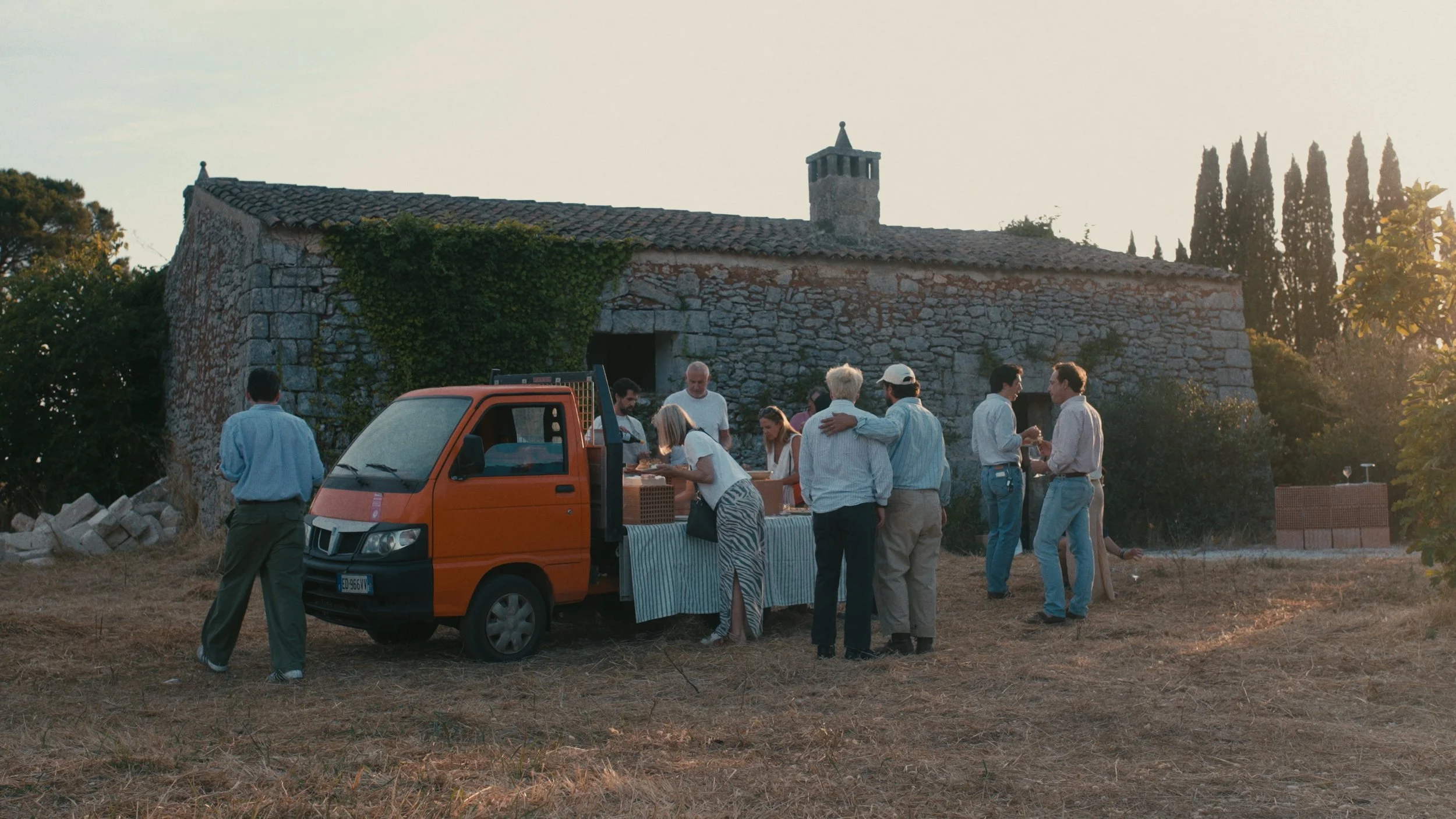
events
towards abundance.
Transforming depleted soil into fertile ground for regeneration, learning, practice and community.
what is syntropic agriculture?
-
Syntropic Farming - also known as Syntropic Agroforestry or Successional Agroforestry - is a set of principles and practices created by the Swiss geneticist and farmer Ernst Götsch, that helps farmers learn how to read the natural strategies of regeneration of each given place and translate them into farming interventions. In Syntropic Farming, we respect and mimic nature. It is life’s tendency to accumulate and organize energy, which is expressed in the form of greater diversity and complexity. This is why the concept of syntropy is central to this practice. In short, syntropy is the complementary opposite of entropy. While entropy governs thermodynamic transformations that release energy at the expense of complexity, syntropy governs life, accumulating and organising energy. Syntropic Farming seeks to mimic these life processes of energy accumulation in establishing agroecosystems capable of integrating production and regeneration.
-
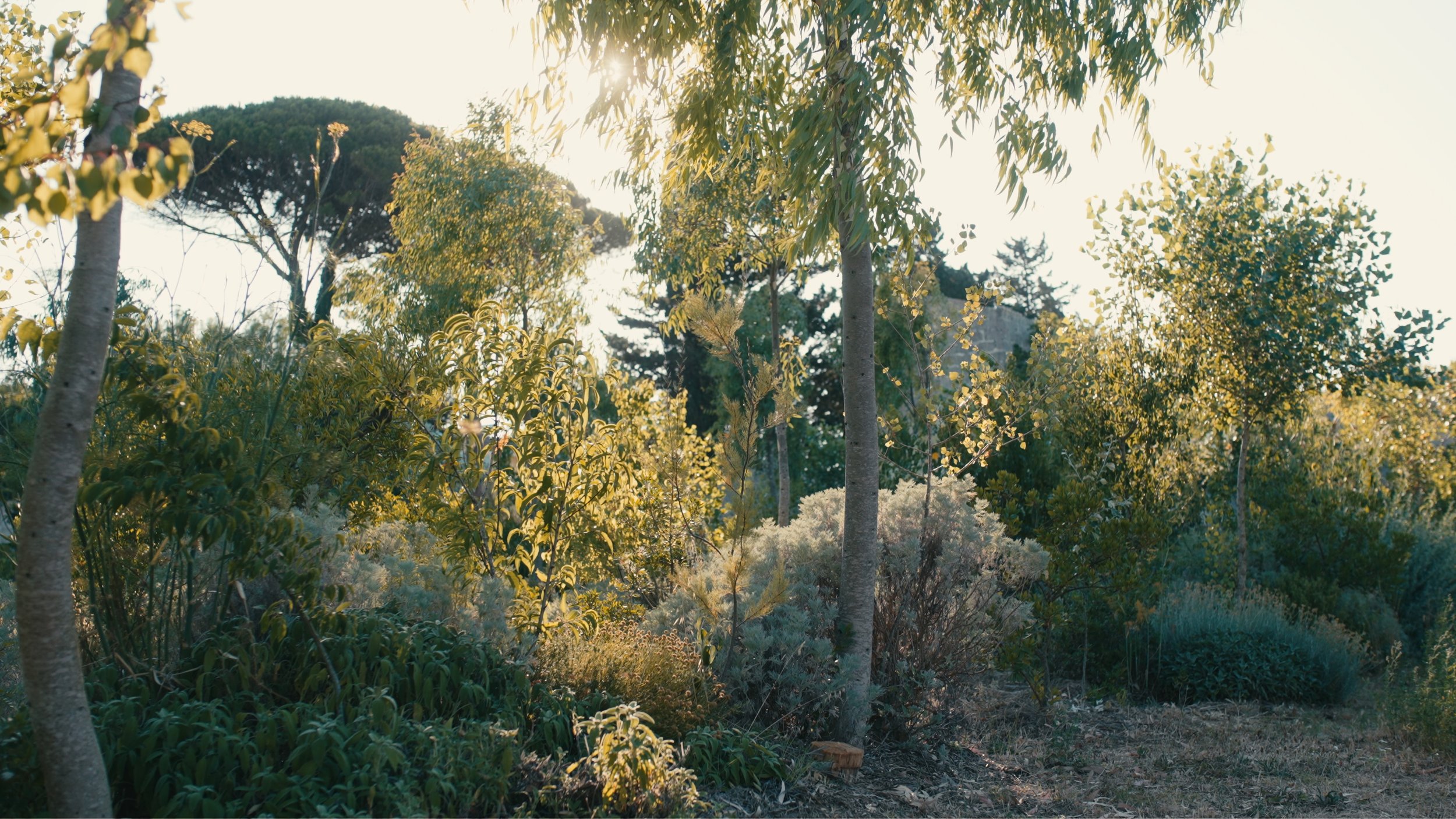
Every functional natural ecosystem is composed of diversified plants that grow together. Within any group of plants, there are species with different life cycles and different light demands or shade resistance. Despite specific features, they not only grow together but also perform a mutual collaborative dynamic while doing so. Fast-growing species protect and nourish slower-growing ones in a way that each group of plants creates conditions for the emergence of the next. Syntropic Farming translates these natural characteristics – in their form, function, and dynamics – into designs and techniques that organize plant distribution in space, both horizontally and vertically (3 dimensions) and in time (4th dimension), according to their life cycles. This is done in a way that optimizes photosynthesis and biomass production, ultimately increasing soil carbon and fertility and its capacity to retain water - therefore creating conditions for more demanding species. Within the conceptual framework of Syntropic Farming, we are talking about strata distribution (ground, low, medium, canopy, and emergent layers) and ecological succession (placenta I, placenta II, secondary I, secondary II, climax, transitional). These categories of classification help us compose our plant consortia and guide us in the management needed to maintain our agroecosystem.
-
Since its creation by Ernst Gotsch in the 1970s, this practice has gained strong practical expression, especially in Central and South America. Since 2015, when it was presented at COP 21, it has also gained representative traction in Europe (Portugal, Spain, France, Germany, Italy, Greece), Africa (Mozambique, South Africa), the USA (Hawaii), and Oceania (Australia and New Zealand). Scientific publications on the subject have also been made, especially after 2016. Last year (2022) was released the first book, Vida em Sintropia by Dayana Andrade and Felipe Pasini, which explains in depth the theoretical foundations of Syntropic Farming.